Every fermented thing you love is the result of a decision somebody made about microbes: leave them to chance, buy them in a packet, or keep the ones you already have. Finca Los Nogales keeps the ones it already has.
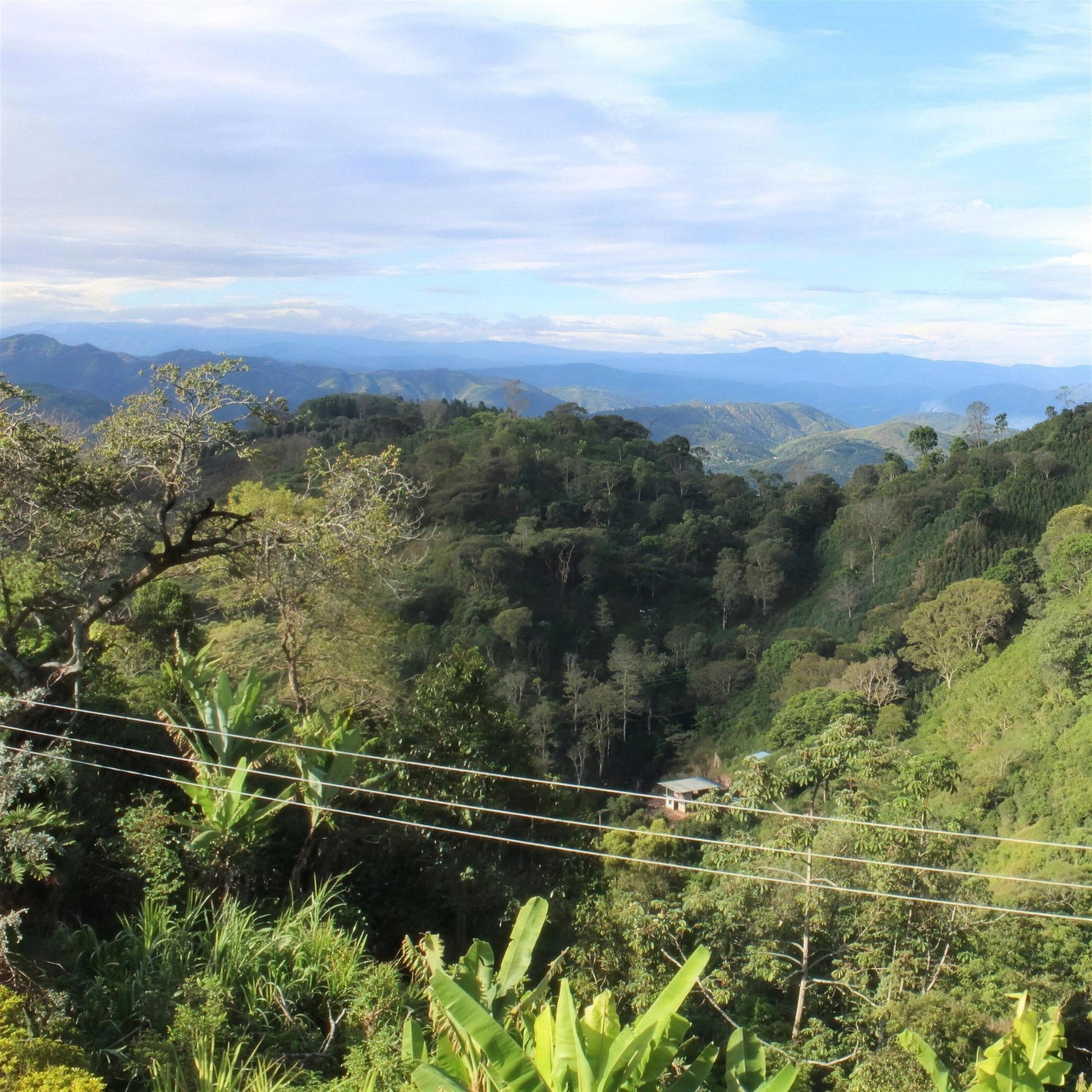
The farm sits in the village of El Diamante, in Bruselas — the largest district in Colombia — outside Pitalito in Huila. The Hernández family has worked it for about eighty years. Ricardo Hernández and Concepción Castillo settled there “dreaming of making a name in coffee history,” and raised eight children on the land. In 2005 the estate won first place in Colombia's Cup of Excellence.


In 2013 Ricaurte Hernández — the youngest of those eight children, and by then the farm's driving force — was killed in the violence of the Colombian countryside, leaving what the family calls a legacy of resilience. His youngest son, Oscar Fernando Hernández, chose to honour it rather than sell. With a background in environmental management, he rebuilt Los Nogales into a modern production centre organised around research, technology and conservation.
Which brings us to the mosto.
What a mosto actually is
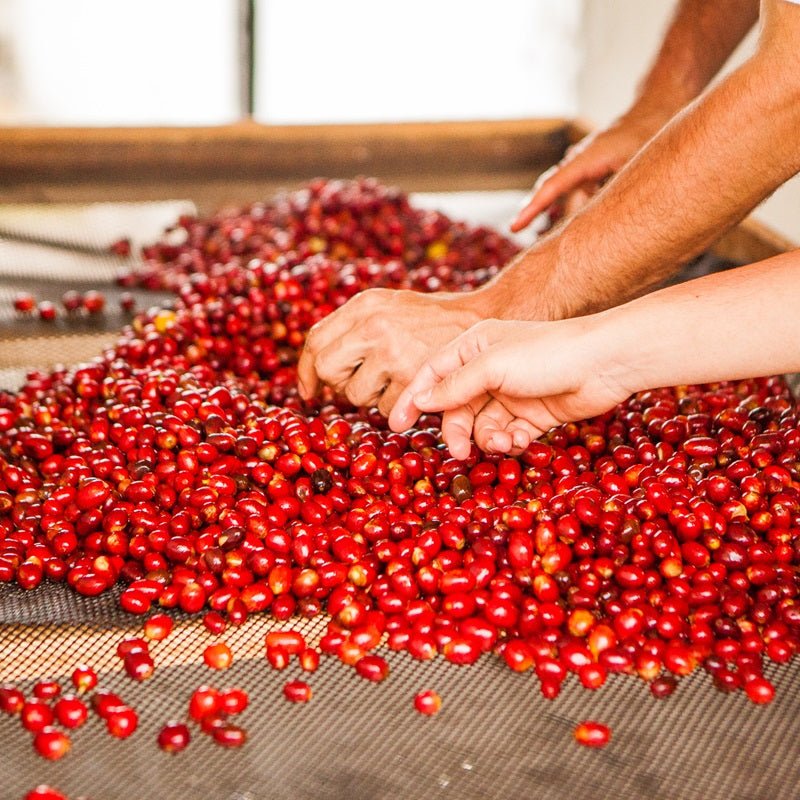
Borrowed from winemaking, mosto means the juice — the pressed liquid before and during fermentation. In coffee it refers to the liquid that runs off fermenting cherry: sugars, acids, and the living population of yeasts and bacteria that have been working on that particular farm's fruit.
Los Nogales saves that liquid from a batch of Caturra and holds it at a controlled 18 °C. It then becomes the starter for the next batch of the same variety. The microbes that flavoured the last lot are the microbes that begin the next one.
Preserving the native microorganisms from this pre-fermentation dough is the farm's secret to a distinctive flavor profile.
Oscar Fernando Hernández
He reaches for the word “dough” and the comparison is exact. A baker keeping a sourdough starter isn't adding flavour from outside — they're maintaining a population, feeding it, and letting the same community of organisms shape loaf after loaf. Nothing arrives from elsewhere. What you taste is a culture the place has been keeping.
Why this isn't a co-ferment
A lot of what gets labelled “experimental” is co-fermentation: fruit, juice, or a purchased commercial yeast added to the tank. It's a legitimate technique and it can produce spectacular cups. But the flavour it produces arrives from what you put in.
A mosto adds nothing that didn't come off the farm's own cherries. The complexity belongs to the place — and, because the starter is kept and re-fed rather than re-invented, it can be repeated next harvest. That's the distinction we care about: not novelty, but a variable you can name and hit again.

Twenty seconds at 80 °C
There's one more step before the tank is sealed, and it's the one people find strangest: a thermal shock. The cherries are held at 80 °C for twenty seconds, then quenched in cold water. The heat opens the fruit's pores and lifts sugar development; the cold stops it exactly there.
Then the sealed tank, the saved mosto, and ninety-six hours held at 18 °C. Sealed means the microbes work without oxygen, which changes what they produce; holding the temperature down means they work slowly and evenly rather than running away in the afternoon heat. Four days later the coffee goes into mechanical silos, then rests a fortnight in GrainPro before it ships.

- Variety
- Caturra
- Altitude
- 1,750–1,950 m
- Pre-treatment
- 80 °C for 20 seconds, then a cold-water quench
- Starter
- The farm's own mosto, saved from the previous Caturra batch, held at 18 °C
- Fermentation
- 96 hours, sealed, held at 18 °C
- Drying
- Mechanical silos, 2–4 days
- Rest
- 15 days in GrainPro
Banana, rose, lime and tangerine, over white chocolate. None of it was added. It was cultivated — on one hillside, by one family, from a culture they've been keeping.
Colombia Nativo Nogales · 96h Anaerobic Mosto Natural — Finca Los Nogales, Pitalito, Huila. Banana, rose, candied citrus.