Our Guamo lot isn't named for a village, a farm or a family. It's named for a tree — the guamo, one of the native shade species planted across the farms the coffee comes from.
That's not decoration. It's the whole argument.
The Reforest Project
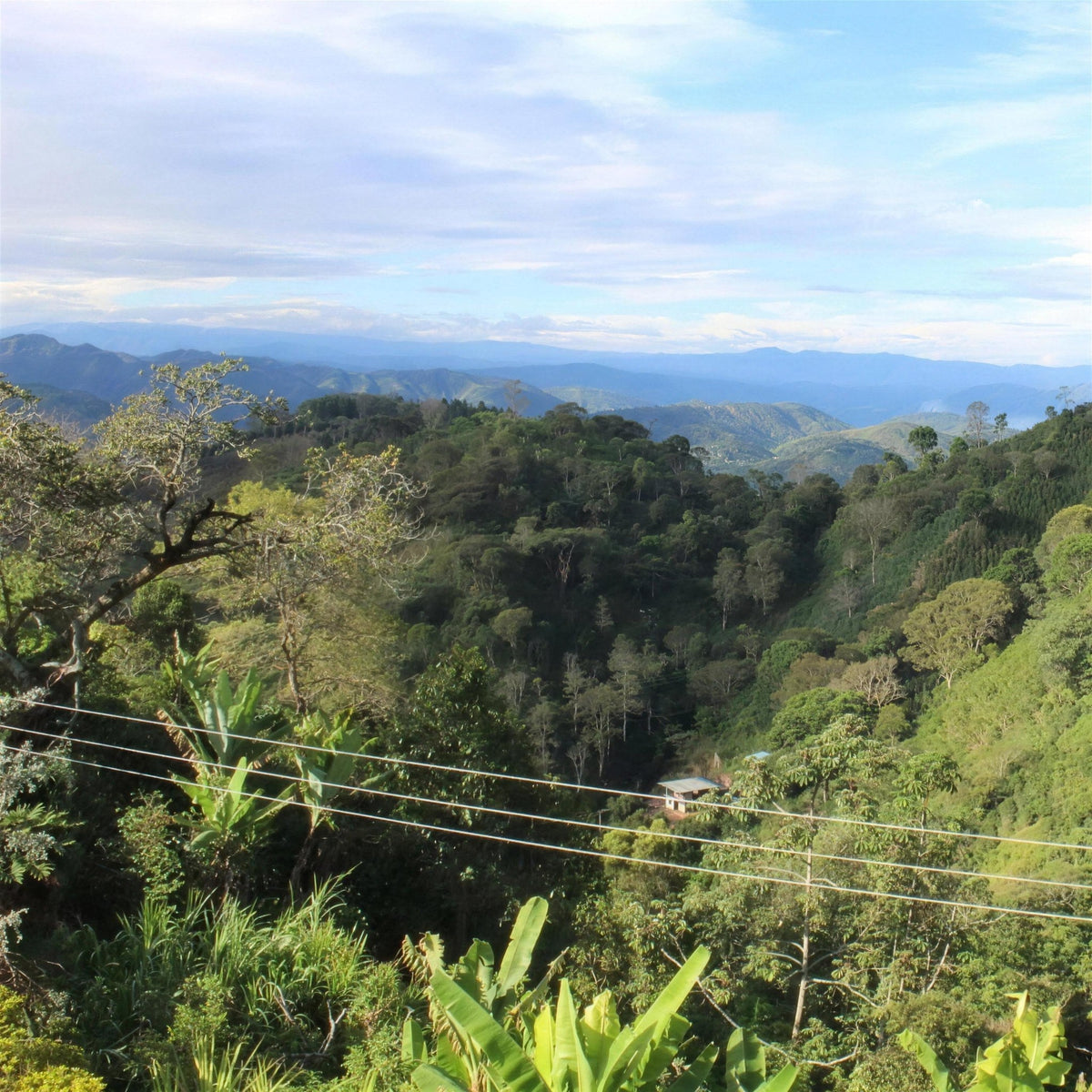
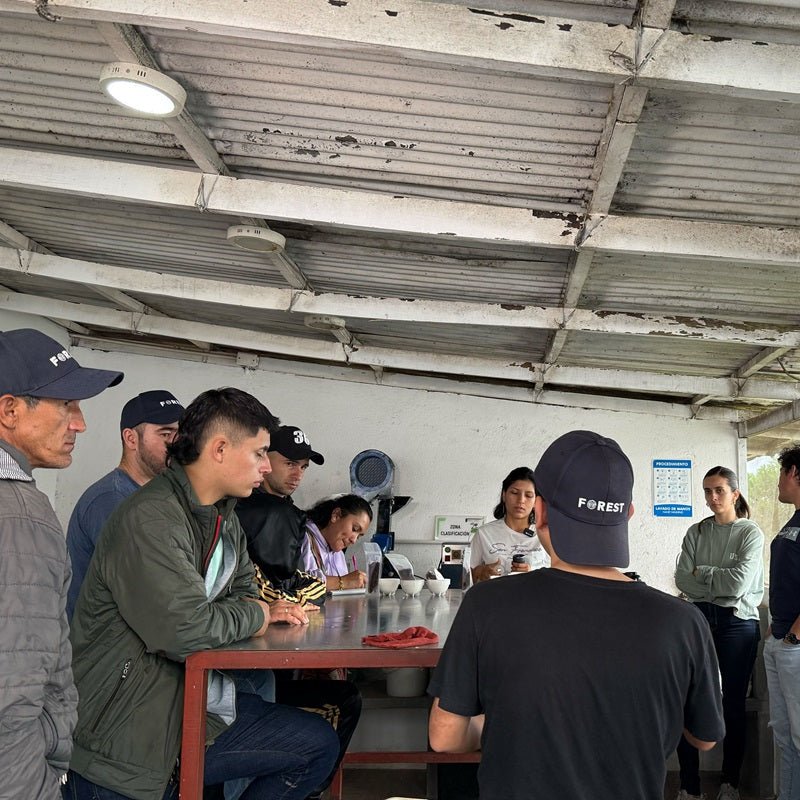
The Reforest Project is Forest Coffee's climate programme in northern Tolima and southern Caldas — Fresno, Manzanares and Padua. Around sixty smallholder producer families make up the 2026 cohort. Alongside coffee, the project plants native trees on their land: guamo, payandé and jagua among them.


What shade actually does
Shade-grown isn't a marketing word, it's a microclimate. A canopy over coffee lowers peak leaf temperature, buffers the swing between day and night, holds moisture in the soil, and slows ripening — and slower ripening is one of the reliable levers on cup quality, because the seed spends longer accumulating sugars and acids. Leaf litter feeds the soil. Roots hold the hillside.
It also buys time. Coffee is fussy about temperature, and Colombia is getting warmer.

Every degree of warming pushes the coffee-growing zone about 167 metres further up the mountain.
There is only so much mountain. A farm at 1,800 metres can't move, so the options are to change what grows there, change the conditions it grows in, or eventually stop growing coffee. Planting shade is the second option, and it's the only one a smallholder can act on this season.
Forest's stated goal is 5,000 native trees by 2030, with a 2026 target of 500 across roughly sixty producers' farms plus El Vergel itself. Their earlier 2025 materials describe 500 already planted since October 2024. We quote these with dates attached because the programme's own numbers have moved between documents — which is what an actual programme looks like, as opposed to a claim.
Why smallholders shouldn't have to dry their own coffee
Here's the part of the model we find genuinely clever. The growers grow and pick. They don't dry.
Drying is where small lots die. It's the longest step, it eats the most space, and it's the one most exposed to weather — an unexpected week of rain, a bed turned unevenly, a patio too small for the harvest, and a year's work goes from specialty to commodity or to mould. It's also the step where consistency across dozens of tiny farms is hardest to achieve.
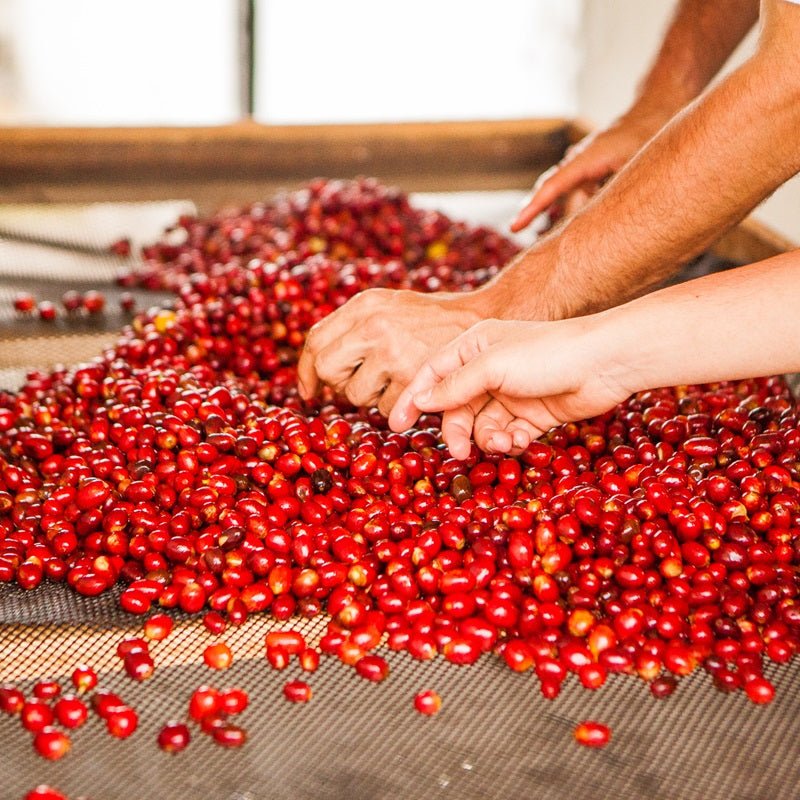
So the Reforest Project centralises it. Cherry goes to El Vergel Estate — the same farm behind our Papayo — where there are tanks, silos and people whose whole job is fermentation and drying. The grower is relieved of the riskiest step and the most price exposure; the lot gets processed to a spec.

That's how a smallholder Caturra from Manzanares ends up with a fermentation spec you'd normally only see on an estate lot: a 36-hour anaerobic pre-ferment in GrainPro, then 96 hours in hermetic tanks held at 23 °C. Two stages, 132 hours of controlled fermentation in total. Then about a week of mechanical drying held at 22% humidity, and thirty days of GrainPro rest down to 10.5% moisture.
- Growers
- Reforest Project families · Manzanares, Caldas
- Processed at
- El Vergel Estate, Fresno, Tolima
- Altitude
- 1,800 m
- Variety
- Caturra
- Stage one
- 36 hours anaerobic pre-ferment in GrainPro
- Stage two
- 96 hours in hermetic tanks at 23 °C
- Drying
- Mechanical, ~7 days, held at 22% humidity
- Rest
- 30 days in GrainPro, to 10.5% moisture
Cocoa, red cherry and blueberry, with a green-apple edge and a round, syrupy body. It's the most affordable coffee we sell and one of the most controlled, which is not the trade-off people expect.
And it's named after a tree that will still be growing when the ferment is long forgotten.
Colombia Guamo · 36+96h Anaerobic Natural — Reforest Project growers, Manzanares, Caldas. Cocoa, red cherry, blueberry.