Most coffees are named for a place — a village, a mountain, a farm. Papayo Jungle is named for a plant. The lot takes its name from the Papayo cultivar itself, which tells you where the character comes from before you've tasted anything.
Cultivar, variety, species — what's actually being named
Nearly all specialty coffee is one species: Coffea arabica. Inside that species sit the names you see on bags — Bourbon, Typica, Caturra, Geisha, Pacamara. Those are cultivars: cultivated varieties, selected and propagated by people because they do something useful or delicious.
A cultivar isn't a footnote. It sets the bean's size and density, the plant's yield and disease resistance, how it copes with altitude, and a large share of the flavour ceiling. Process can amplify what's there or flatten it. It can't install what the plant never had.

Papayo
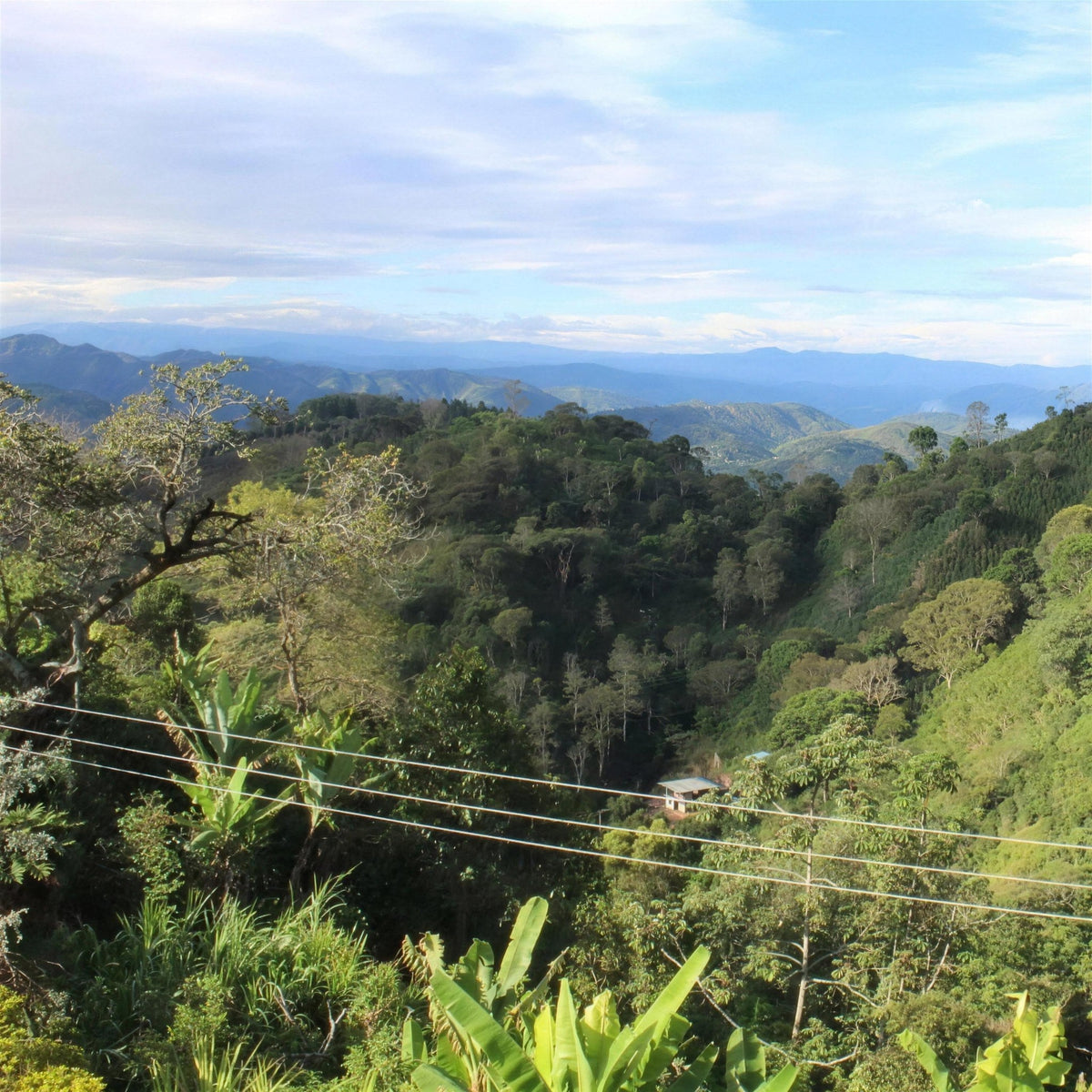
Papayo is rare. It grows on small plots at El Vergel Estate in Fresno, Tolima, at around 1,500 metres, and it produces notably large beans — large enough that it reads as a different coffee on the table before it's ever brewed.
Bean size matters more than it sounds. A bigger bean carries more mass per unit of surface, so heat travels into it more slowly during roasting. That's why lots are usually screen-sorted before roasting: mix sizes in one batch and the small beans are done while the large ones are still developing. A uniformly large lot is a roasting advantage, so long as you know that's what you have.
Papayo also sits inside an unusual collection. El Vergel grows more than 28 varieties — the exotics were planted from 2016 with guidance from the varietal specialist Miguel Jiménez, and 2017 was the estate's first production year for them. Geisha, Java, Pacamara, Red Bourbon, Laurina all grow there. A farm that keeps a library like that is running experiments on purpose.


Four hours open, ninety-six hours sealed
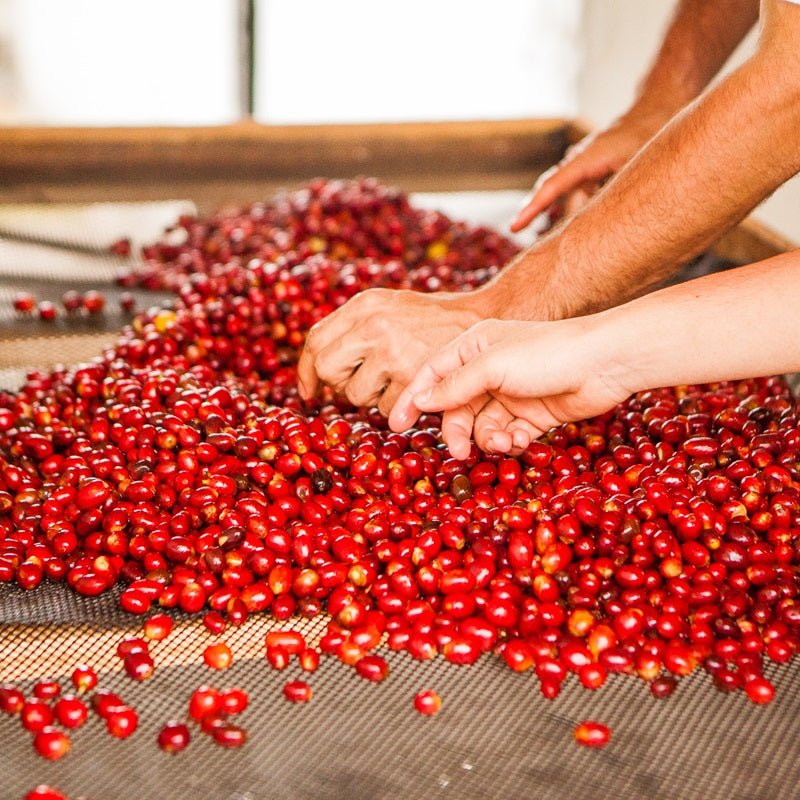
The process is deliberately two-part. The cherries spend four hours on tarps in the open air — aerobic, oxygen present — which wakes the fruit up. Then they go into hermetic tanks under shade for ninety-six hours, sealed, with humidity held between 22 and 25%.
Humidity is the named variable here, and that's worth pausing on. In a sealed vessel, the moisture in the air governs how fast sugars move out of the mucilage and how the microbial population behaves. Hold it in a band and you get the same ferment twice. Let it drift and you get a story instead of a spec.

- Cultivar
- Papayo — rare, large-beaned, small plots
- Farm
- El Vergel Estate · Fresno, Tolima
- Altitude
- 1,500 m
- Pre-ferment
- 4 hours open-air on tarps
- Fermentation
- 96 hours in hermetic tanks under shade, humidity held 22–25%
- Drying
- Mechanical, 76 hours
- Rest
- 30 days in GrainPro
Forest, our importer partner, files this lot in their own “Reserve” category. We reached the same conclusion independently, on green cost alone — it's the most expensive coffee in our lineup, which is what the rarest variety on the list ought to be.
Strawberry, mango and pineapple over a chocolate base, with a citric lift. The variety provides. The process controls.
Colombia Papayo Jungle · 96h Anaerobic Natural — El Vergel Estate, Fresno, Tolima. Strawberry, mango, chocolate, pineapple. Reserve tier.