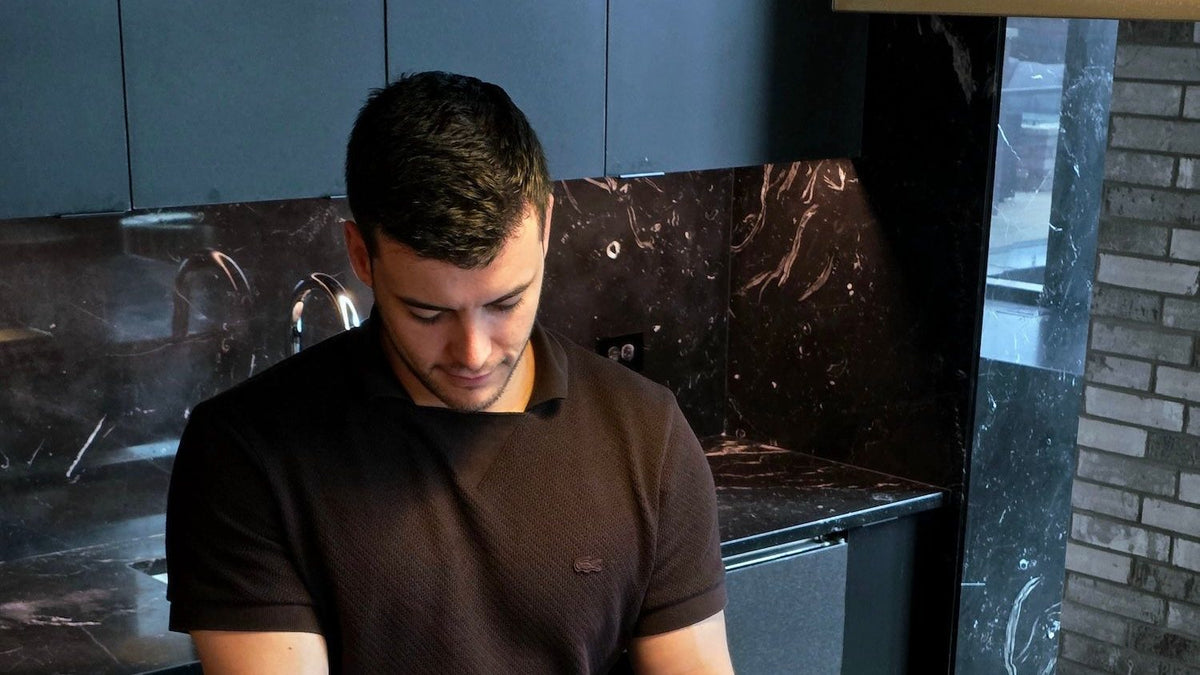
For years, Mulugeta Muntasha's job was to move other people's coffee.
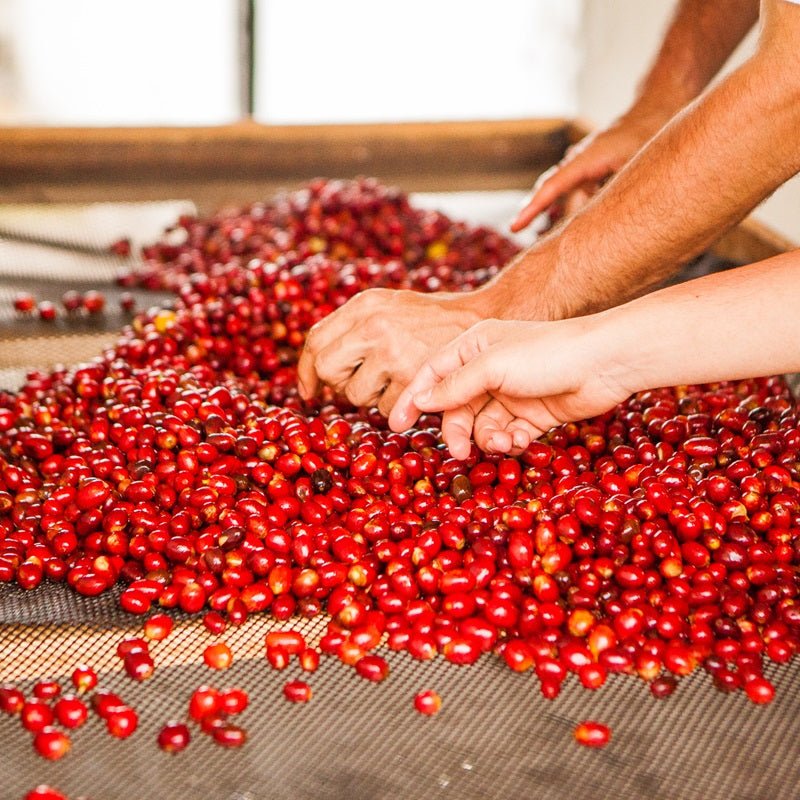
He drove trucks in the Arsi region, hauling cherry from collection points to private washing stations. Later he became a collector, buying coffee and selling it into the central market. It was an education from the outside in: what ripe cherry looks like when it arrives, what a good station does with it, and how much of the value is won or lost in the days after picking.
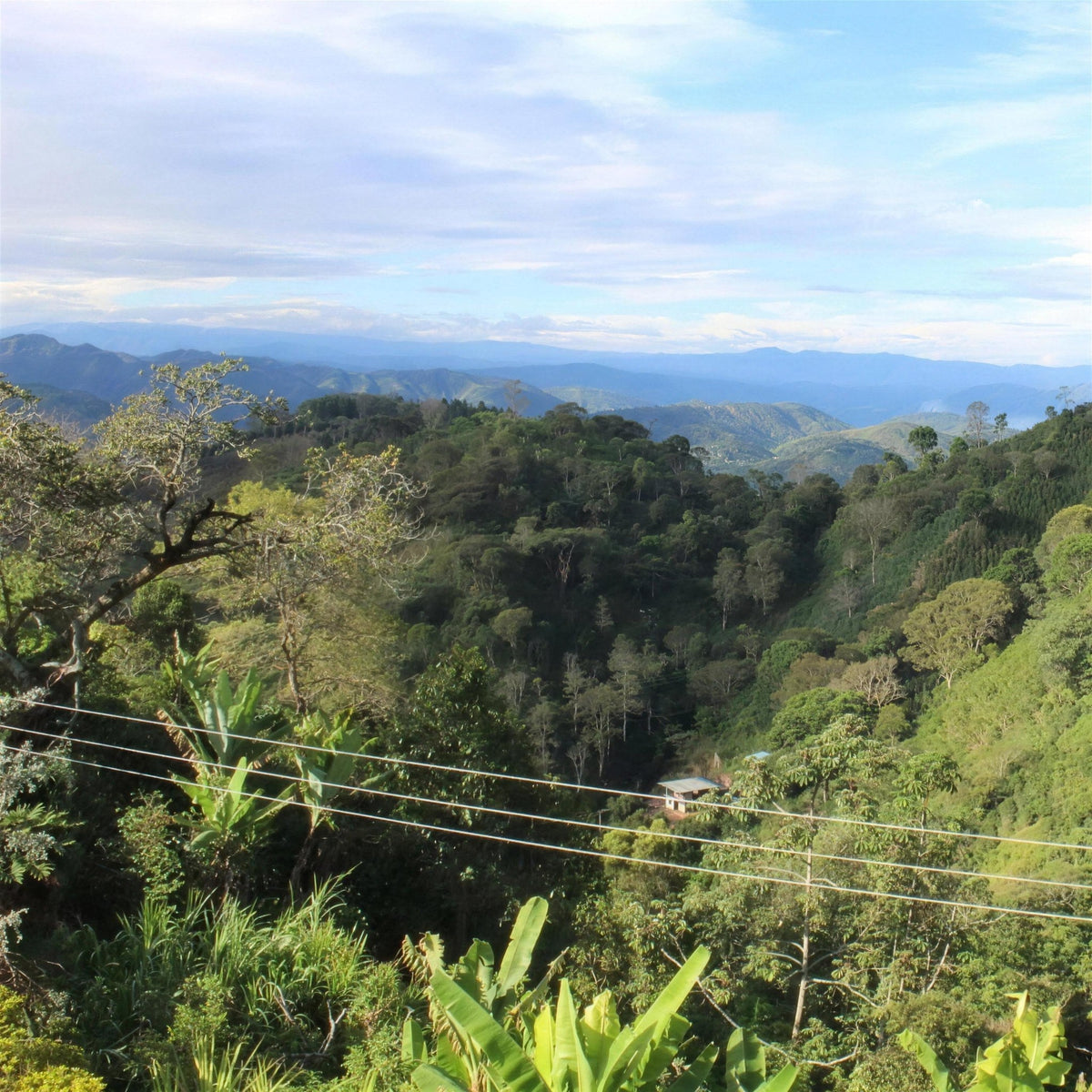
Home was Bursa, a village in the Arbegona hills of Sidama, where coffee had never really been a crop. Then the weather changed. As the climate warmed, coffee began to grow where it hadn't before. Families in Bursa planted, the local agricultural office helped, and a village with no coffee tradition suddenly had trees on its slopes.
In 2021 Mulugeta went home and built a drying station of his own. He called it Dawencho.
The first two harvests
Ethiopia's Cup of Excellence is judged blind. Jurors taste every lot without knowing whose coffee is in the bowl.
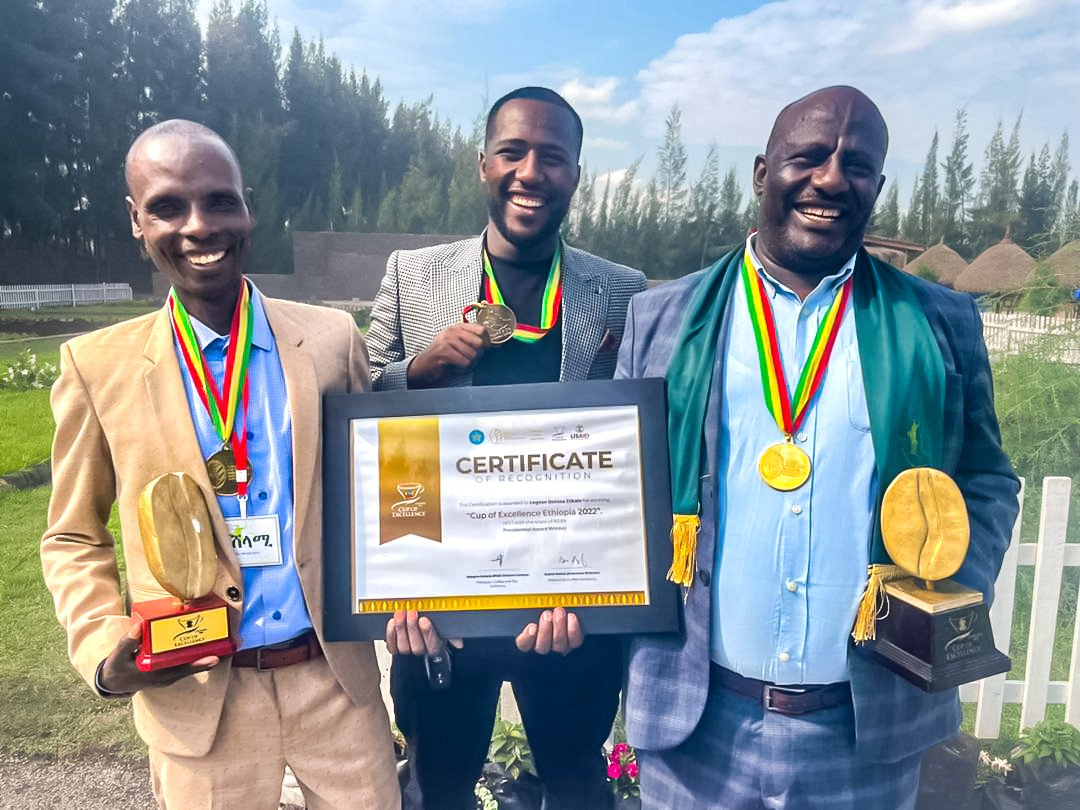
In 2021, Dawencho's first year, the young farmers' union his company had just partnered with placed second in the country. Two lots under Mulugeta's own name placed sixth and fifteenth. "I believe our high score in this competition will help to promote our coffee," he told the competition that year. He keeps the fifteenth-place certificate framed beside his medals.
The next year the winner was a neighbour: Legese Botosa, Mulugeta's brother-in-law, a young father of four farming less than half a hectare, whose lot sold at auction for a record $400.50 a pound. Crop to Cup, who import Mulugeta's coffee, count four of that year's top ten, the winner included, as dried on Dawencho's beds.
A station barely a year old, in a village with almost no coffee history, had become one of the clearest signs in Ethiopia of how fast quality can rise when someone careful is in charge of the drying beds.
Why his name is on the bag
Most Ethiopian coffee travels anonymously. It is graded and sold through a national auction in large contracts, often before a buyer can taste it, and by the time it reaches an exporter the trail back to the people who grew and dried it has gone cold. It moves a lot of coffee efficiently. It makes it very hard for excellent work to be recognized as someone's.
Mulugeta took the harder road: processing and exporting under his own name, through his company, Bursa Speciality Coffee. That means carrying the equipment, the drying space and the risk himself. He has said plainly that he thinks farmers are underpaid. Today the company buys from hundreds of smallholder families around Bursa and runs natural, washed, honey and anaerobic lots from the same hills. His son, Degefu, oversees much of the farming and helps run the station.
The two coffees we buy from him
We buy two of his lots, and we buy them for opposite reasons.
The first is Bursa Washed, an Ethiopian Grade 1 grown at 2,300 to 2,400 metres. A washed coffee has nowhere to hide: no fermentation to lean on, no drying trick to add sweetness. It shows you exactly how carefully the cherry was picked and how clean the station is. In the cup: apricot, lime, raspberry and honeysuckle. Bright and delicate, a classic Ethiopian.
The second is Bursa Anaerobic: the same hills and the same hands, with the cherries sealed away from air while they ferment. Papaya, strawberry wine, watermelon and tea. Fruit-forward, but easygoing.
We're a house built on controlled fermentation, so people sometimes ask why we carry a washed coffee at all. Mulugeta is the answer. Control isn't one technique; it's a standard. A producer whose station places in a blind national competition two years running has that standard. Our job is to find people like him and not waste what they make.
Ethiopia Bursa · Washed G1: apricot, lime, raspberry, honeysuckle.
Ethiopia Bursa · Anaerobic Natural G1: papaya, strawberry wine, watermelon, tea.