Table of Contents
- Why Fermented Coffee Tastes Different
- What Is Controlled Fermentation in Coffee?
- Anaerobic Coffee Processing Methods Explained
- Single Origin Lots Worth Buying in 2026
- How to Brew Fermented Coffee at Home
- Pricing, Subscriptions, and What You Get
- Frequently Asked Questions
Last Updated: September 26, 2026
Why Fermented Coffee Tastes Different
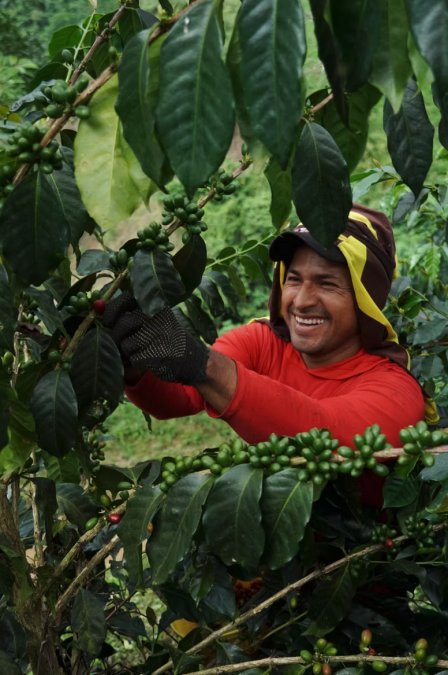
Fermented coffee tastes different because the fruit surrounding the bean is deliberately controlled during processing, not simply dried off it. When producers seal cherries in low-oxygen tanks, naturally present yeasts and bacteria convert sugars into aromatic compounds that standard washed processing never produces. At Anaerobic, we built our entire sourcing model around this distinction: fermentation should reveal a coffee's character, not disguise it. Below, we break down what controlled fermentation actually is, which single origin lots are worth buying in 2026, and how to brew them without losing the fruit you paid for.
The gap between a well-fermented coffee and a poorly fermented one is enormous. One cup tastes like strawberry and cocoa; another tastes like nail polish. That variance is why buying single origin fermented coffee requires more care than buying a standard roast. You need to know the producer, the processing method, and the fermentation duration before you commit.
According to the Specialty Coffee Association's processing standards, fermentation is one of the most influential variables in final cup quality, and it is also one of the least regulated. That combination is exactly why transparency matters when you buy.
What Is Controlled Fermentation in Coffee?
Controlled fermentation in coffee is the practice of managing temperature, time, oxygen exposure, and microbial activity during processing so the resulting flavor is repeatable rather than accidental. Traditional fermentation happens in open-air tanks with no monitoring. Controlled fermentation happens in sealed vessels, sometimes with added native-culture starters, with the clock and the thermometer recorded.
The distinction matters for buyers. A producer running controlled fermentation can tell you exactly how long the cherries were sealed and at what temperature. That data is your only reliable predictor of what the coffee will taste like.
Most natural-process coffees ferment for a day or less before drying. Anaerobic lots routinely run 48 to 132 hours. The longer window gives microbes more time to produce esters and organic acids, which is where the tropical, wine-like, and berry notes come from.
UC Davis Coffee Center research on fermentation has examined how microbial activity during processing shapes acidity and aroma precursors. The practical takeaway for home brewers is straightforward: fermentation is a flavor tool, and like any tool, it produces better results when someone is measuring.
Anaerobic Coffee Processing Methods Explained
Anaerobic coffee processing methods fall into three main families: anaerobic natural, anaerobic washed, and anaerobic honey. Each controls oxygen differently, and each produces a distinct texture and acidity profile.
- Anaerobic natural: Whole cherries seal in tanks or GrainPro bags. Fruit stays in contact with the bean the entire time. Produces the heaviest body and the most intense fruit.
- Anaerobic washed: Cherries are depulped first, then the mucilage-covered beans ferment without oxygen. Cleaner cup, brighter acidity, more restrained fruit.
- Anaerobic honey: Some mucilage remains during sealed fermentation. Sits between the other two in body and clarity.
A common mistake is assuming longer fermentation always means more flavor. Past a certain point, extended fermentation produces volatile acidity and a solvent-like character. The best producers stop the process at the point where the cup peaks, which is why 96 hours shows up so often in reserve lots.
Single Origin Lots Worth Buying in 2026
The best single origin fermented coffees in 2026 come from producers who document fermentation parameters and roast to preserve them. Below are four lots from Anaerobic that meet that standard, each with full process transparency.
Lot |
Origin |
Process |
Tasting Notes |
Price |
|---|---|---|---|---|
Huila, Colombia |
96h Anaerobic Mosto Natural |
Banana, rose, lime, white chocolate |
$45.00 |
|
Colombia Papayo Jungle |
Tolima, Colombia |
96h Anaerobic Natural |
Strawberry, mango, pomegranate |
$45.00 |
Colombia Guamo |
Manzanares, Caldas |
36+96h Anaerobic Natural |
Cocoa, red cherry, blueberry |
$32.00 |
Uganda Coffee Yards |
Mt. Elgon, Uganda |
48h Anaerobic Natural |
Chocolate fudge, banana, toffee |
$32.00 |
Colombia Nativo Nogales: Native-Culture Mosto Natural
This is the lot that best explains why terroir matters in fermented coffee. Nativo Nogales ferments with the farm's own native-culture starter, the same mosto reused season after season. Sealed for 96 hours at 18°C, the Caturra variety develops banana, rose, lime, tangerine, and a long white-chocolate finish.

What most reviews miss is that a native-culture starter makes a coffee nearly impossible to replicate elsewhere. The microbes belong to that farm. You are tasting a specific place, not a technique.
Colombia Papayo Jungle: Layered Tropical Fruit
Papayo Jungle runs a 4-hour open-air pre-ferment before sealing for 96 hours. That two-stage structure is why the fruit reads as layered rather than monolithic. Strawberry, mango, pomegranate, pineapple, and chocolate arrive in sequence instead of all at once.
Colombia Nativo Nogales · 96h Anaerobic →
The Papayo variety is uncommon, and this is a reserve lot. If you want a coffee that tastes like nothing else on your shelf, start here.
Colombia Guamo and Uganda Coffee Yards: Two Clocks, One Method
These two lots are the same idea run at different speeds. Uganda Coffee Yards seals whole SL14 and SL28 cherries for 48 hours, producing chocolate fudge, banana flambé, and toffee. Colombia Guamo runs a 36-hour pre-ferment plus 96 hours in hermetic tanks at 23°C, totaling 132 hours, which yields cocoa, red cherry, and blueberry.
Guamo comes from the Reforest Project in Manzanares, processed at El Vergel Estate, where fermentation is held to the hour and the degree. The Uganda lot comes from roughly 300 smallholder families on Mt. Elgon, processed at The Coffee Yards under Norman Mukuru. Drink them side by side and the role of time becomes obvious.
How to Brew Fermented Coffee at Home
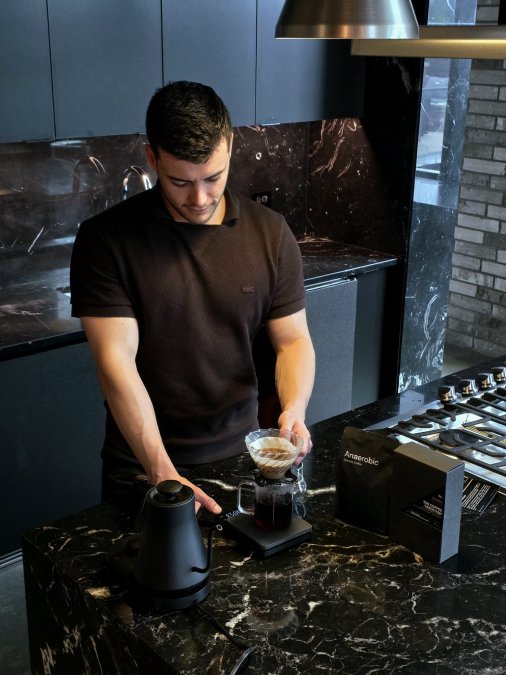
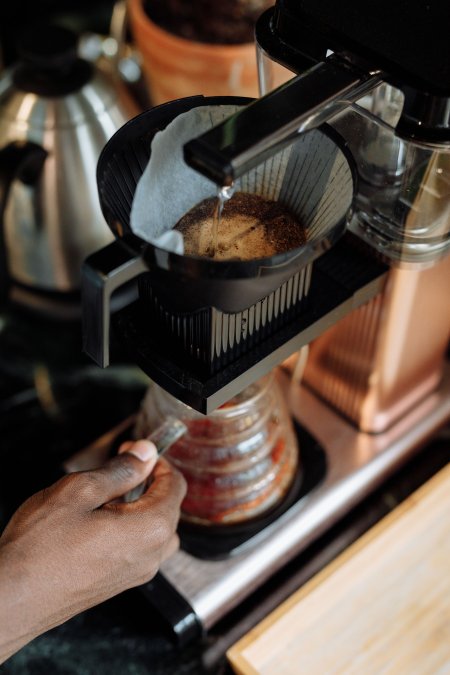
Brew fermented coffee at home with a pour-over setup and water between 200°F and 205°F. Fermented beans are more soluble than standard roasts, so start with a coarser grind and a slightly lower temperature than you would use for a washed coffee. That single adjustment prevents the over-extraction that turns fruit-forward notes into bitter, solvent-like flavors.
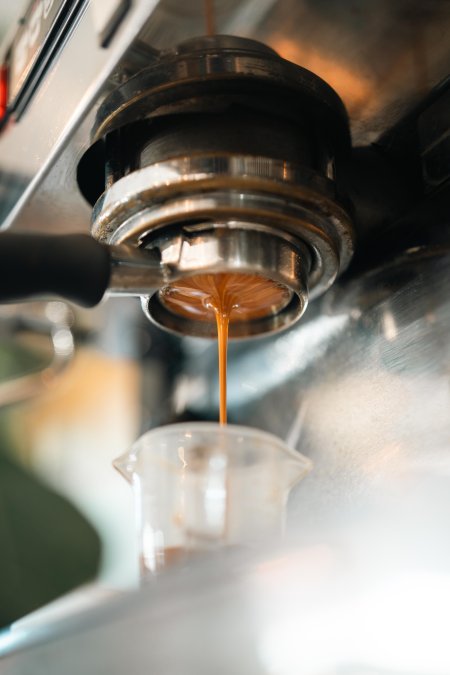
The reason fermented beans demand a different approach comes down to chemistry. During anaerobic fermentation, microbes produce organic acids, lactic, acetic, and others, along with esters that create fruit aromas. These compounds are more water-soluble than the chlorogenic acids in standard washed coffees. That means they extract faster, and the window between a vibrant cup and a muddy one is narrower. Most practitioners find that dropping brew temperature by 5°F and coarsening the grind by one setting keeps the cup in the sweet spot.
Use this starting recipe and adjust from there:
- Dose: 15 g coffee to 250 g water (1:16.6 ratio)
- Grind: Medium-coarse, similar to a standard V60 setting
- Temperature: 200°F
- Bloom: 45 g water, 45 seconds
- Pours: Three equal pours to 250 g, finishing around 2:45
A French press works well for the heavier natural lots like Papayo Jungle, where the body benefits from full immersion. A Chemex or V60 suits the cleaner, more floral Nativo Nogales. If you are coming from standard supermarket coffee, expect the fruit to hit first and hard. That is the point.

The thing nobody tells you about brewing fermented coffee is that small grind changes swing flavor more than they do with conventional beans. Move one click coarser before you change anything else. If the cup tastes thin and sour, go finer by one click. If it tastes bitter or ashy, go coarser.
Pricing, Subscriptions, and What You Get
Anaerobic's single origin fermented coffees are priced at $45.00 for the reserve lots (Nativo Nogales, Papayo Jungle) and $32.00 for the Guamo and Uganda lots. Every order ships within 48 hours of roasting, and shipping is free on orders over $50.
Frequently Asked Questions
How does anaerobic fermentation change coffee flavor?
Sealing coffee cherries without oxygen slows sugar breakdown and lets specific acids and esters develop. A 48-hour sealed ferment tends toward chocolate fudge and toffee, while 96 hours pushes into guava, overripe peach, and mulled wine. The same farm, same variety, and same method produce different cups based only on time sealed. That controlled variable is what separates intentional fermented coffee from batches that taste unpredictable.
Is fermented coffee higher in acidity?
Fermented coffee often tastes brighter because the process creates fruit-forward acids like citric and malic, but perceived acidity depends on roast level and brewing. A light-medium roast keeps that citric lift while resolving the cocoa base. If you are sensitive to bright cups, try a slightly coarser grind and a lower water temperature around 195°F to soften the edge without losing the fruit character.
How should I brew experimental fermented coffee at home?
Start with a 1:16 ratio, medium-fine grind, and 200°F water. For pour-over, bloom with 40g of water for 45 seconds, then pour in slow circles to 320g total over three minutes. Fermented beans reward precision, so use a scale and a timer. If the cup tastes muddy, grind coarser. If it tastes thin, grind finer. French press works too, but pour-over shows the fruit notes more clearly.
Where can I buy high-quality single-origin fermented coffee?
Look for roasters who name the producer, region, variety, and exact fermentation hours. Anaerobic sells small-batch lots like Colombia Nativo Nogales at $45 and Uganda Coffee Yards at $32, all whole bean and roasted to order. Subscriptions save 10-15%, and orders over $50 ship free. Freshness matters most: beans shipped within 48 hours of roasting taste noticeably different from bags sitting on a shelf for weeks.