Table of Contents
- How We Evaluated Experimental Coffee Subscriptions
- Quick Comparison: Experimental Coffee Subscriptions in 2026
- What to Look For in Experimental Coffee Subscriptions
- The Anaerobic Fermentation Coffee Process, Explained
- Best Overall: The Beyond Discovery Set
- Best for Rare Lots: The Cellar and Reserve Microlots
- How to Buy Small Batch Coffee Online Without Guessing
- How to Brew Experimental Coffee at Home
- Frequently Asked Questions
Last Updated: September 13, 2026
How We Evaluated Experimental Coffee Subscriptions
The best experimental coffee subscription 2026 tells you exactly how the coffee was fermented, when it was roasted, and who grew it. We scored each option on process transparency, roast date freshness, and whether fermentation is documented hour by hour rather than in vague marketing language. At Anaerobic, we work directly with producers running controlled fermentation, so we know what a credible process claim looks like.
Experimental coffee is processed using controlled, measured techniques such as anaerobic fermentation, extended sealed ferments, and native-culture starters, rather than whatever microbes happen to be present during drying. Unmeasured fermentation produces the funky, undrinkable cups many drinkers have already encountered.
We scored each subscription on documented process detail, time from roast to shipment, producer transparency, lot traceability, and flexibility to pause or switch. A roaster listing a country but not a farm, varietal, or fermentation duration loses points immediately.
Quick Comparison: Experimental Coffee Subscriptions in 2026
Every option below comes from Anaerobic's own lineup, because comparing controlled-fermentation lots only works when the roaster publishes the full process record.
Option |
Price |
Format |
Best For |
|---|---|---|---|
$81.80 |
Three 10oz bags |
Comparing processes side by side |
|
$92.20 |
Three 10oz bags |
Rare lots and Reserve microlots |
|
Colombia Papayo Jungle |
$45.00 |
10oz whole bean |
Rare cultivars, tropical fruit |
Colombia Nativo Nogales |
$45.00 |
10oz whole bean |
Native-culture fermentation |
Uganda Coffee Yards 96h |
$32.00 |
10oz whole bean |
Stone fruit and mulled wine |
Ethiopia Bursa Anaerobic G1 |
$32.00 |
10oz whole bean |
Floral, wine-like clarity |
Coffee Sample |
$12.00 |
50 g |
Testing before committing |
The Beyond holds the origin steady and changes only the process, making it the fastest way to understand what fermentation contributes.

What to Look For in Experimental Coffee Subscriptions
Process Transparency and Roast Date
A credible roaster publishes the fermentation duration, vessel, temperature, and drying method. Anything less is a guess dressed up as a process note.
Papayo Jungle runs a 4-hour open-air pre-ferment on tarps, then 96 sealed hours at 22-25% humidity. Nativo Nogales pasteurizes cherry for 20 seconds at 80 °C, then ferments on the farm's own mosto at 18 °C (Checking your browser). Checkable numbers are the point.

Roast date matters just as much. Coffee sealed the day it is roasted and shipped within 48 hours tastes materially different from a bag that sat in a warehouse. Check for a printed roast date, not a best-by date.
Shipping Frequency and Flexibility
Recurring delivery should bend to your brewing pace. Look for pause and cancel options you can trigger yourself, without an email chain or retention call.
A common mistake is committing to a large-format subscription before you know which fermentation profiles you enjoy. Start with samples, then scale.
The Anaerobic Fermentation Coffee Process, Explained
The anaerobic fermentation coffee process seals whole cherries in an oxygen-free tank for a measured period, letting native microbes break down sugars without oxygen. Sealing removes the variables open-air fermentation leaves to chance, so flavors develop on a schedule rather than by accident.
Duration is the dial. Uganda Coffee Yards runs the same farms, heritage SL varieties, and sealed method at two clocks: 48 hours yields chocolate fudge, banana flambé and toffee; 96 hours yields guava, overripe peach and mulled wine. One variable, moved deliberately.
Temperature and vessel matter too. Guamo ferments in two stages, a 36-hour sealed pre-ferment then 96 hours at 23 °C, 132 hours total. Nogales holds 18 °C for 96 hours. Both are documented to the hour.
Best Overall: The Beyond Discovery Set
The Beyond is the clearest answer to what fermentation adds, because it holds everything else constant. Ethiopia Bursa G1 Anaerobic and Bursa G1 Washed both come from Mulugeta Muntasha in Arbegona, Sidama: the same 74158 heirloom taken down two different roads. One is sealed oxygen-free for 96 hours; the other is washed clean. Uganda Coffee Yards 96h sits alongside as a third reference point.
Tasted in sequence, the difference stops being abstract. The washed lot reads as apricot, honeysuckle and raspberry; the anaerobic lot from the same station reads as papaya, strawberry wine and watermelon. Same hands, same altitude, different answer.
Pros: Direct process comparison; three full 10oz bags; producer named and traceable. Cons: At $81.80 it is a commitment before you know your preference; three bags is a lot of coffee to work through.
Best for Rare Lots: The Cellar and Reserve Microlots
The Cellar pairs two anaerobic benchmarks with a Reserve microlot, the format to choose when you want the rarest cup in the lineup set against reference points. It ships with Ethiopia Bursa Anaerobic G1 standing in for Colombia Guamo while out of stock, alongside Uganda Coffee Yards 96h and Colombia Papayo Jungle.

Papayo is a Colombian cultivar rare enough that the lot is named after it, grown by Elías and Shady Bayter at El Vergel Estate in Fresno, Tolima, and sold through an importer's exotic-cultivar program. The lot is roughly 72 kg of green coffee, a few hundred bags, not a standing product line.
Nativo Nogales is the other Reserve worth knowing. The Hernández family at Finca Los Nogales took first place in Colombia's 2005 Cup of Excellence, and the farm runs its own dry mill. The fermentation uses the farm's own mosto, a native-culture starter held back from the previous Caturra harvest, which is why banana, rose and candied citrus sit on top of the varietal rather than replacing it.
How to Buy Small Batch Coffee Online Without Guessing
To buy small batch coffee online without guessing, verify four things before checkout: the printed roast date, the fermentation duration, the named producer, and the lot size. If a listing omits any, you are buying on faith. Those four matter more than tasting notes because they are the only variables a buyer can independently confirm, flavor descriptors are marketing, but a roast date and fermentation clock are records.
Here is a practical checklist for evaluating any listing:
- Roast date printed on the bag, not a best-by date
- Fermentation duration stated in hours
- Vessel and temperature disclosed
- Producer and farm named, not just the country
- Varietal listed
- Lot size or allocation stated
- Drying method described
- Pause and cancel terms visible before purchase
Why Each Check Changes the Cup
A printed roast date tells you how much degassing has already happened. A best-by date is usually set 6-12 months out and tells you nothing about when the beans were roasted (usda.gov).
Fermentation duration is the single most predictive number on a bag. A 48-hour and a 96-hour sealed ferment from the same farm can taste like two different coffees, chocolate fudge and toffee in one, guava and mulled wine in the other. If the roaster will not state the hours, assume the process was not measured.
Vessel and temperature disclosure separates controlled fermentation from open-air drying with a marketing label. A roaster who can name the tank, sealed stage, and holding temperature works from a process record; one who says only "anaerobic" is describing a category, not a lot.
Direct-to-Consumer vs. Roaster-Direct: Why It Matters for Experimental Lots
The supply chain behind an experimental bag shapes how experimental it actually is. Three paths exist:
- Roaster-direct: The roaster buys green coffee straight from the producer or a farm-level export operation. Process records travel with the lot, and the roaster can usually tell you the fermentation hours, the tank, and the drying method because they asked the producer directly.
- Importer-mediated: The roaster buys through a specialty importer running an exotic-cultivar or microlot program. Traceability is strong, importer programs typically document farm, varietal, and process, but the roaster is one step removed from the producer and may not have the full fermentation log.
- Spot-market or white-label: The roaster buys green coffee on the open market with limited farm-level documentation. This is where vague process claims concentrate, because the roaster often cannot verify what happened at the mill.
A common pattern is that the most transparent listings come from roasters who either buy direct or buy through a named importer program and publish the importer's lot documentation alongside their own roast notes. If a listing names neither a producer nor an importer program, treat the process description as unverified.
Pricing, Shipping, and Sample Strategy
Free shipping over $50 and subscription savings of 10-15% are standard incentives, but they should never be the deciding factor, process disclosure is. A $12.00 50 g sample with a printed roast date and stated fermentation duration is worth more than a discounted full bag with a country name and a flavor paragraph.
A 50 g sample is the lowest-risk way to test a roaster's claims. At a 15 g dose that is three brews, enough to taste the coffee. If the sample tastes like the printed notes, the larger format will too; if it tastes like generic coffee with a fruit note stapled on, you have saved yourself three 10oz bags.
How to Brew Experimental Coffee at Home
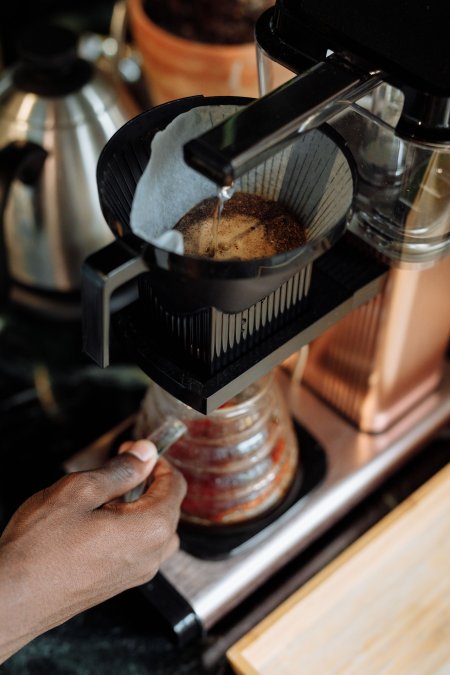
Brew experimental coffee at home with a 1:16 coffee-to-water ratio, water just off boil, and a brewer you can control for time and temperature. Complex fermented lots reward precision and punish guesswork, and the same bean behaves differently in an AeroPress, a V60, and a cold brew jar, so the wrong brewer can flatten the aromatics you paid a premium for.
Start with 15 g of coffee to 240 g of water. Grind medium-fine for pour-over, medium-coarse for immersion. Bloom with 45 g of water for 45 seconds, then pour in two or three stages, finishing between 2:30 and 3:30.
You do not need professional equipment, a gooseneck kettle, digital scale, and burr grinder cover it. What you need is consistency: change one variable at a time, and taste before you adjust.
Brewer Compatibility: Where Experimental Lots Win and Lose
Not every experimental roast performs equally across brewers. The processing method changes how soluble the bean is, which changes which brewer flatters it.
- Pour-over (V60, Chemex, Kalita): The default for washed and lightly fermented lots. Paper filtration strips some oils and suspended solids, which sharpens floral and wine-like notes, the papaya, strawberry wine, and watermelon character in a 96-hour anaerobic lot reads cleanest here. The trade-off is that heavy, syrupy ferments can taste thin and hollow through paper.
- AeroPress: Pressure plus a short steep time tends to amplify body and sweetness while muting the most volatile top notes. A 48-hour ferment showing chocolate fudge and toffee often tastes rounder and more dessert-like in an AeroPress than in a pour-over. A delicate floral anaerobic lot, by contrast, can lose its perfume under pressure.
- Immersion (French press, Clever Dripper): Full immersion keeps oils in the cup, which suits funky, fruit-forward ferments and native-culture lots where the texture is part of the point. The risk is muddiness, a 96-hour ferment that tastes precise in a V60 can taste overripe and muddy in a French press if the grind is too fine.
- Cold brew: Low temperature slows extraction of the bitter compounds but also slows extraction of the bright acids. Cold brew tends to suppress the floral and wine-like top notes that make experimental lots distinctive, while emphasizing chocolate, stone fruit, and caramel. It is a good use for a ferment you find too intense hot, and a poor use for a delicate one.
A practical rule: the longer and more intense the ferment, the more the bean benefits from a brewer that gives you control over contact time. If a lot tastes flat in one brewer, try another before blaming the coffee.
Storage and Shelf-Life: Protecting Volatile Aromatics
Experimental lots are expensive because of compounds that are also fragile. The esters and volatile aromatics behind guava, rose, and mulled wine notes oxidize faster than the base coffee, so a rare ferment can lose its defining character weeks before it goes stale in the ordinary sense.
A few practices preserve those compounds:
- Keep beans whole until brewing. Grinding multiplies surface area and accelerates aromatic loss from minutes to seconds. Grind immediately before you brew.
- Use an opaque, airtight container with a one-way valve. Light degrades oils, and a valve lets carbon dioxide escape without letting oxygen in. A rolled-down bag with a clip is a compromise, not a solution.
- Store at room temperature, away from the stove and the freezer. Freezing introduces moisture every time the container is opened, and refrigerator storage exposes beans to odors and condensation. A cool, dark cabinet beats both.
- Buy in quantities you will finish. A 10oz bag at 15 g per brew is roughly 19 cups. At one cup a day, that is about three weeks, near the outer edge of peak flavor for a delicate ferment.
- Rest, then drink. Rest, then drink. Brew one on day two, again on day seven, and note the difference in clarity. Once you know a lot's peak window, plan your brewing around it rather than letting the bag sit.
Specialty Coffee Association brewing standards
Frequently Asked Questions
What makes a coffee subscription experimental?
An experimental coffee subscription centers on controlled fermentation rather than standard washed processing. Lots are sealed in tanks for set windows, often 48 to 96 hours, with temperature and humidity held steady. The result is a flavor profile built on purpose instead of left to whatever yeast happened to be in the air. Look for roasters who publish the process, the hours and the producer name, not just a tasting note.
How does anaerobic fermentation change the flavor profile of coffee?
Sealing cherries without oxygen slows fermentation and shifts which compounds develop. In practice that shows up as riper fruit, heavier body and notes like strawberry, guava or mulled wine. The Colombia Papayo Jungle lot runs 96 hours sealed and cups with strawberry, mango and pomegranate. The Uganda Coffee Yards 96h lands on guava and overripe peach. The same farm at 48 hours gives chocolate fudge and toffee instead.
Are experimental coffee subscriptions worth the higher price point?
It depends on what you are comparing against. A 50 g sample runs $12, so you can test a lot for the price of two cafe drinks before committing. Full bags sit at $32, with Reserve microlots at $45 and Discovery Sets from $81.80. The premium buys limited allocation, named producers and roast dates you can verify. If you drink one cup a day and care about origin, the math works.
Do I need special equipment to brew experimental coffee at home?
No. A burr grinder, a scale and a pour-over dripper cover most lots. Start with a 1:16 ratio, 15 g of coffee to 240 g of water, at 200 to 205 degrees Fahrenheit. Drop your water temperature a few degrees if the cup turns bitter. Rest whole beans after the roast date before brewing, and grind right before you pour.
How do I avoid a fermented coffee that tastes funky rather than fruity?
Funky cups usually come from uncontrolled fermentation, where wild yeast and bacteria run unchecked. Controlled lots remove that variable. Colombia Nativo Nogales pasteurizes the cherry for 20 seconds at 80 degrees Celsius, then ferments on the farm's own mosto starter at 18 degrees Celsius for 96 hours. Ask any roaster what the starting culture was and how temperature was held. A vague answer is your signal to skip that lot.