Table of Contents
- What Transparent Coffee Roasting Actually Means
- The Three Layers of Roasting Transparency
- From Green Coffee to First Crack: The Roasting Process Explained
- The Benefits of Direct Trade Coffee Sourcing for Roast Quality
- Coffee Roast Profile Transparency: What the Label Should Tell You
- Experimental Fermentation in Coffee and How It Changes the Roast
- Common Roasting Defects That Opaque Labels Hide
- How to Read a Transparent Roast Label Before You Buy
- Frequently Asked Questions
Last Updated: September 20, 2026
What Transparent Coffee Roasting Actually Means
Transparent coffee roasting practices explained simply: transparency in roasting means disclosing the variables that shape flavor, including origin, process, roast level, and the reasoning behind roast decisions. At Anaerobic, we publish the fermentation hours, temperatures, and producer names behind each lot because those details determine what ends up in your cup.
The specialty coffee industry has spent two decades perfecting origin transparency. You can learn a farm's altitude, varietal, and washing station from almost any bag now. Roasting transparency lags far behind.
That gap matters because roasting is where green coffee's potential gets either revealed or rescued. A roaster working with an opaque profile can hide defects, mask mediocre green coffee behind dark development, or blend away inconsistency. None of that shows up on a label.
This guide breaks down what transparent roasting looks like across three layers, how the roast itself works, and what a label should actually tell you before you spend money on a bag.
The Three Layers of Roasting Transparency
Transparency in roasting operates on three distinct layers, and most roasters only deliver one of them.
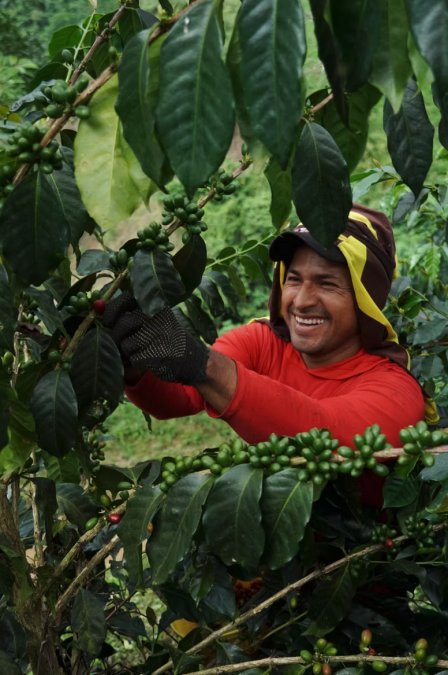
Layer one is sourcing disclosure. This covers who grew the coffee, where, at what altitude, and through what relationship the roaster acquired it. Direct trade arrangements belong here, and the specifics matter more than the label.
Layer two is process disclosure. This is where fermentation protocols, processing method, and drying details live. A transparent roaster states that a coffee underwent a 96-hour anaerobic ferment at a controlled temperature rather than calling it "experimental process" and moving on.
Layer three is roast disclosure. This is the rarest layer. It includes roast level, development time, and how the roaster approached the curve. Very few bags tell you whether the roast was built to reveal the fermentation or to smooth it out.
From Green Coffee to First Crack: The Roasting Process Explained
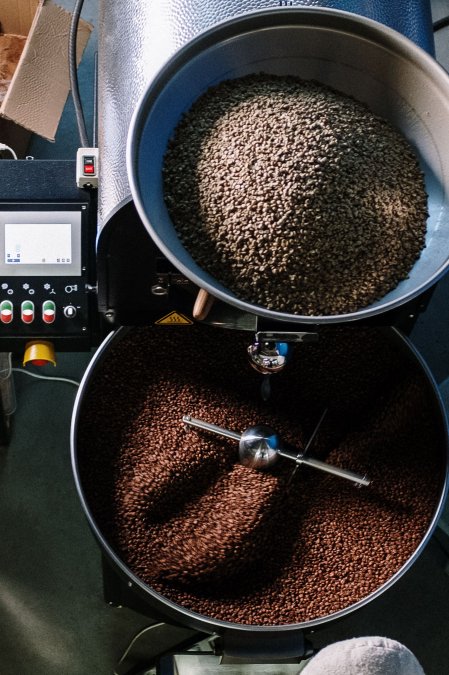
Roasting transforms green coffee through applied heat, and the roast curve is the record of that transformation over time. A roaster charges green coffee into a heated drum, and from that moment the bean moves through drying, browning, and development phases defined by internal temperature and chemical change.
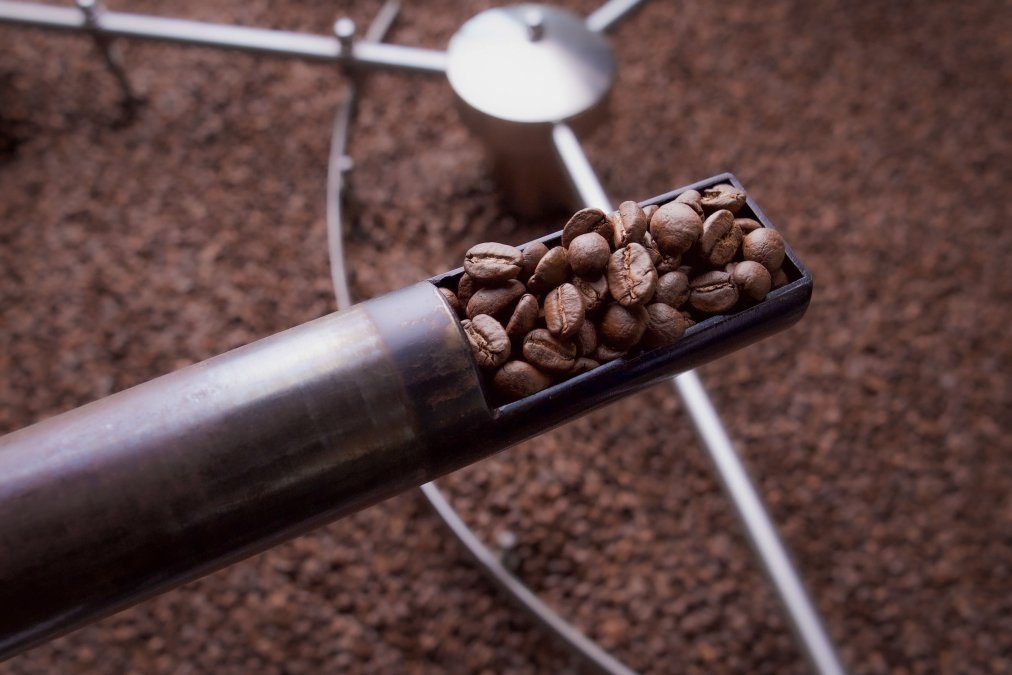
A small-batch drum roaster on a workshop bench with a batch of green coffee beans in a metal tray beside it, a roaster's hand holding a metal trier scooping beans mid-roast, warm light from the drum, steam rising
Heat Application, Airflow, and the Roast Curve
Heat reaches green coffee through three paths: conduction from the drum surface, convection from hot air moving through the batch, and radiation from the drum walls. How a roaster balances those three determines the shape of the roast curve, which is simply bean temperature plotted against time.
Airflow controls how much convective heat enters the drum and how efficiently chaff and smoke exit. Increase airflow and the roast moves faster with brighter acidity. Reduce it and the roast develops deeper body with more caramelized sweetness. Batch size and bean density interact with both, which is why a profile that works at 5 kilograms will not behave the same at 15.
The Maillard reaction drives most of the flavor development during the browning phase, converting sugars and amino acids into the aromatic compounds that define a coffee's character. Caramelization follows, and both processes are temperature and time dependent. A roaster managing ROR, or rate of rise, is managing how quickly the bean moves through these reactions.
First Crack, Second Crack, and Development Time
First crack is the audible pop that signals the bean has built enough internal steam pressure to fracture its structure. It marks the transition from endothermic to exothermic behavior, meaning the bean starts generating its own heat. Development time is everything that happens between first crack and drop.
Second crack arrives later, quieter and faster, as cell walls break down further and oils migrate to the surface. Roasts taken into second crack land in dark territory, where origin character fades and roast flavor dominates.
A transparent roaster tells you where the roast dropped relative to these markers. A coffee dropped 45 seconds after first crack tastes fundamentally different from one dropped two minutes after, even from the same green lot.
The Benefits of Direct Trade Coffee Sourcing for Roast Quality
Direct trade sourcing gives roasters information they cannot get through a broker, and that information directly improves roast outcomes. When a roaster knows the moisture content, density, and processing history of a specific lot, the roast curve can be built around those actual variables instead of generic assumptions.
The benefits of direct trade coffee sourcing extend past ethics into cup quality.
Coffee Roast Profile Transparency: What the Label Should Tell You
Coffee roast profile transparency means the label states roast level, development approach, and the intent behind the roast, not just a vague descriptor like "medium." A label that says "medium roast" tells you almost nothing about what the roaster was trying to achieve.
What a genuinely transparent roast label includes:
- Roast level with specificity: "light-medium development" rather than "medium"
- Development intent: whether the roast was built to preserve acidity, resolve a natural process, or emphasize body
- Process details: fermentation duration, temperature, and method where applicable
- Producer and lot identification: the farm, region, and lot number
- Harvest year: so you know the coffee's age
- Resting and sealing timeline: when it was roasted and how it was packaged
Experimental Fermentation in Coffee and How It Changes the Roast
Experimental fermentation in coffee changes what the roaster is working with before the drum ever heats up, and it changes how the roast must be built. Fermentation develops flavor precursors in the green bean, and the roast either carries those precursors through to the cup or destroys them.
Common Roasting Defects That Opaque Labels Hide
Roasting defects are the strongest argument for transparency, because a defect is invisible on a bag and obvious in a cup. Four defects account for most of what goes wrong, and opaque labeling lets all of them pass as stylistic choices.
- Scorching: the bean surface burns against an overheated drum before the interior develops. The cup tastes ashy and flat, with a burnt edge that no brewing method fixes.
- Tipping: the tip of the bean chars where moisture escaped too fast. It shows up as a harsh, bitter note concentrated in the finish.
- Baked coffee: the roast stalled during first crack, so the bean never developed enough internal energy. The result tastes flat and papery, with acidity that reads dull rather than bright.
- Flick and crash: the rate of rise spikes upward and then collapses. The cup tastes both underdeveloped and overdeveloped at once, which is nearly impossible to correct at the brew stage.
How to Read a Transparent Roast Label Before You Buy
Reading a transparent roast label takes about thirty seconds once you know what to look for, and it will save you from more bad bags than any brewing upgrade.
What to Check |
Transparent Label |
Opaque Label |
|---|---|---|
Origin detail |
Farm name, region, altitude, lot number |
Country only |
Process |
Fermentation type, hours, temperature |
"Natural" or "Washed" |
Harvest year |
Stated (e.g., 2025-26) |
Missing |
Roast level |
Specific (light-medium development) |
"Medium" or "Dark" |
Development intent |
Stated purpose for the roast |
Not mentioned |
Roast date |
Printed with day precision |
"Best by" date only |
Frequently Asked Questions
What does it mean for a coffee roaster to be transparent?
A transparent roaster publishes the details that determine what ends up in your cup: the producer and farm name, the region and altitude, the varietal, the processing method, and the roast development level. Transparent coffee roasting practices also mean naming the harvest year and stating how the coffee was dried and rested. Without those specifics, you cannot tell whether the flavor comes from the coffee itself or from a roast dark enough to hide defects.
Why is roast profile transparency important for home baristas?
Roast profile transparency tells you how far the roaster developed the coffee, which directly affects how you dial it in. A light-medium development roast, like the Colombia Guamo, needs a finer grind and slightly higher water temperature to resolve its cocoa base while keeping the fruit intact. If the roast level is unstated, you are guessing at grind size and ratio. Knowing the profile gives you a starting point instead of a series of wasted brews.
How do experimental fermentation techniques affect coffee roasting?
Controlled fermentation builds flavor compounds in the green coffee before it ever reaches the drum, so the roaster's job shifts from creating flavor to preserving it. A 96-hour anaerobic lot carries volatile fruit and floral notes that a dark roast would burn off, which is why these coffees are typically roasted light-medium. The roast has to be developed enough to resolve the base notes without scorching the delicate aromatics the fermentation produced.
What is the difference between direct trade and fair trade coffee?
Fair trade is a certification system with third-party auditing and a guaranteed minimum price paid to cooperatives. Direct trade is a relationship model where the roaster buys straight from a named producer, often at a price above the commodity market, with more frequent farm-level communication. Direct trade offers more traceability to a specific lot; fair trade offers a verifiable floor. Many specialty roasters use both, and the two are not mutually exclusive.